
Introduction: A Night Shift, A Stalled Bot, A Bigger Question
Picture a quiet factory at midnight, the lights low, the floor humming like a clockwork stage. Robotics software runs the scene in neat loops, yet a small mobile unit drifts and stops beside a pallet—off by inches, but miles from done. Across several audits, teams report that roughly one-third of stoppages tie back to integration bugs and timing drift (small causes, costly nights). Why does a well-planned stack feel brittle when the real world leans on it? The maps are clean; the floor is messy; the data never waits. We load drivers, tune SLAM, and watch queues fill. The robot obeys, then stalls, as if a simple spell misfired. Is the problem the sensors, or the way the stack binds them together? And if so, what would a more resilient shape of code look like—one that bends yet does not break? I keep wondering: is the issue speed, or trust? Let’s pull back the curtain and look at the cracks beneath the shine.
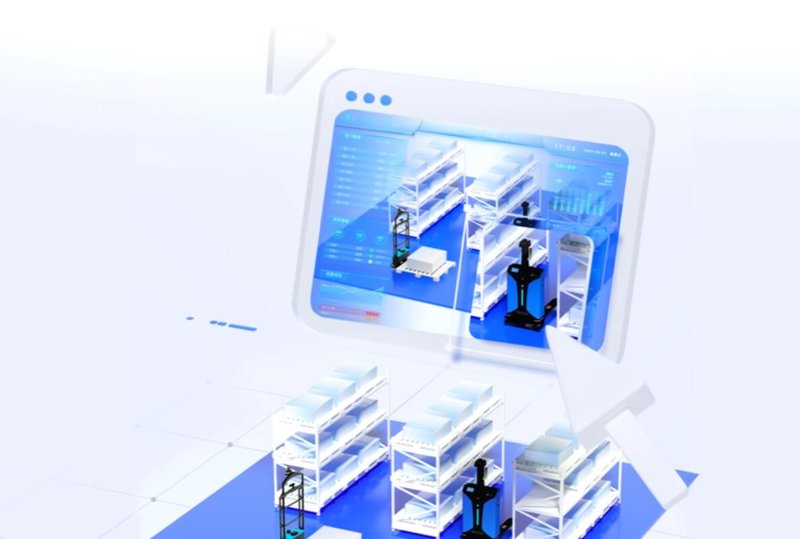
Where Legacy Stacks Falter (A Comparative Look)
Why do legacy stacks buckle?
In many floors, software for robotics is still a stitched quilt of drivers, nodes, and adapters. The pattern is clever, but the seams take the stress. Monoliths push everything through a single middleware layer; a crowded message broker turns bursts into lag. Edge computing nodes help, yet a mismatched real-time kernel can still jitter control loops. SLAM gets busy; the motion planner waits; actuators respond late. Look, it’s simpler than you think: timing and isolation, not just algorithms, decide the day. When logs are shallow and observability is thin, small faults hide. Then they stack—like dust in a gearbox—until the robot coughs.
Traditional fixes try to tune around the pain. More watchdogs. More retries. Tighter PID gains. But that only masks drift caused by configuration spread and driver variance. Legacy stacks also bind safety and autonomy in one path, so a sensor hiccup can leak into a safety stop—hard. Power converters add noise; the bus chatters; the planner flinches. Meanwhile, updates are all-or-nothing. One patch risks a full restart—and production time vanishes. I have seen teams lock features just to keep lines running—funny how that works, right? The flaw is not the math. It is the coupling and the lack of clear, bounded contracts.
New Principles, Clearer Outcomes
What’s Next
Forward-looking stacks change the unit of design from “the robot” to “the contract.” Services are smaller. Paths are explicit. Deterministic middleware with QoS controls gives planners steady ground. Behavior trees encode intent; each leaf has a clean border. Digital twins simulate edge cases, then feed safer defaults back to the fleet. Updates happen in slices—blue/green, canary, roll-forward and back. And when a sensor spikes, isolation keeps the safety channel pure. In this view, software for robotics becomes a set of promises between timing, sensing, and actuation—rather than a maze of callbacks. You get fewer surprises, and shorter ones. Small failures stay small.
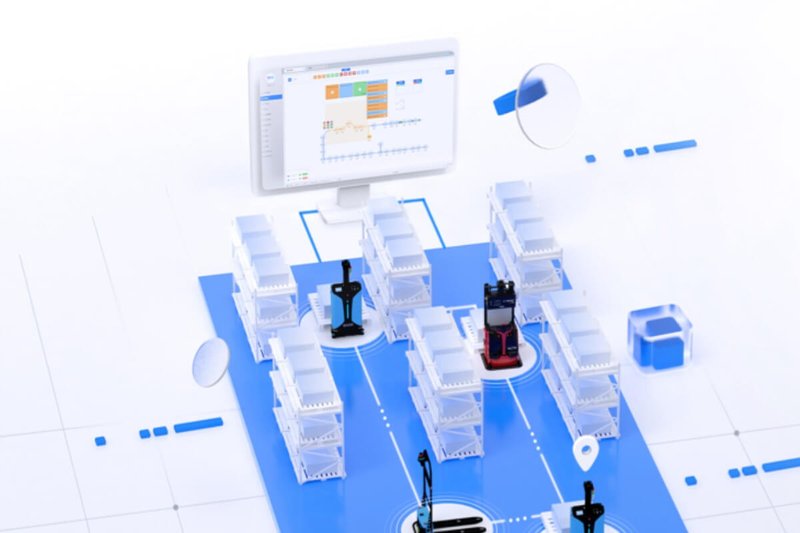
We can see the practical shape already: microservices for perception and localization, a real-time control lane, and a monitored message path for everything else. On-device inference rides close to the metal; fleet logic sits a step away. OTA updates are testable and scoped. Edge computing nodes handle bursts; the cloud aggregates and learns. The lesson from earlier sections holds but evolves: resilience beats raw speed when scale arrives—and speed follows once variance is tamed. For teams choosing a path, use three checks. 1) Determinism under load: measure latency tails, not averages. 2) Observability at fault: trace across nodes, from sensor to actuator. 3) Update safety: prove rollback in minutes, without touching motion. Do this, and the night shift grows calm—less theater, more craft. For ongoing insight across this field, I keep an eye on SEER Robotics.